
Spouses who file jointly share one tax return, so consent from either spouse gives you the shared return records. But each spouse's own income is listed under their own name and tax ID number in their Wage & Income Transcript. Without that spouse's consent, you can't see their W-2s, 1099s, K-1s, etc. You won't see the full picture of the household's income streams.
The Financial Baseline Report and the Tax Prep Checklist are household reports, so without both spouses' consent, the reports will be incomplete.
With Consent From One Spouse
- Account, Tax Return, and Record of Account transcripts are identical for both spouses once a tax return is filed for a particular year.
- Wage & Income transcripts are unique to each person. These include income sources, such as W-2s, 1099s, and K-1s.
- If one spouse has no income, consent from the primary income earner is enough to see the relevant data.
With Consent From Both Spouses
- You have all of the IRS data for the household if they file jointly.
- Each spouse's income appears in their own profile.
- You can easily toggle to the other spouse's profile if they file jointly.
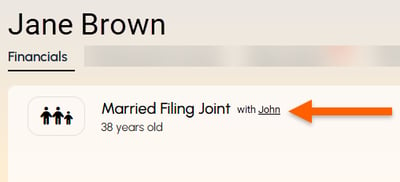
- Your Financial Baseline and Tax Prep Checklist reports are complete. They automatically combine both spouses' information.
What if a couple is married, filing separately?
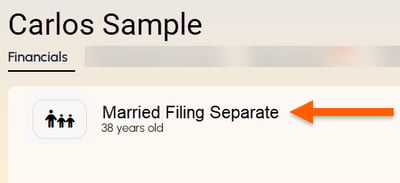
Occasionally, married couples file separate tax returns. The TaxStatus system combines taxpayers into a single household only if they file a joint return. If they file separately, they are always considered separate entities. The Financial Baseline and Tax Prep Checklist will remain unique to each person, and their filing status will be indicated in the TaxStatus system.
Related Articles
- IRS Transcripts
- Assign Clients to a Group - Group related entities regardless of filing status
- Getting Consent - Send your consent link to both spouses